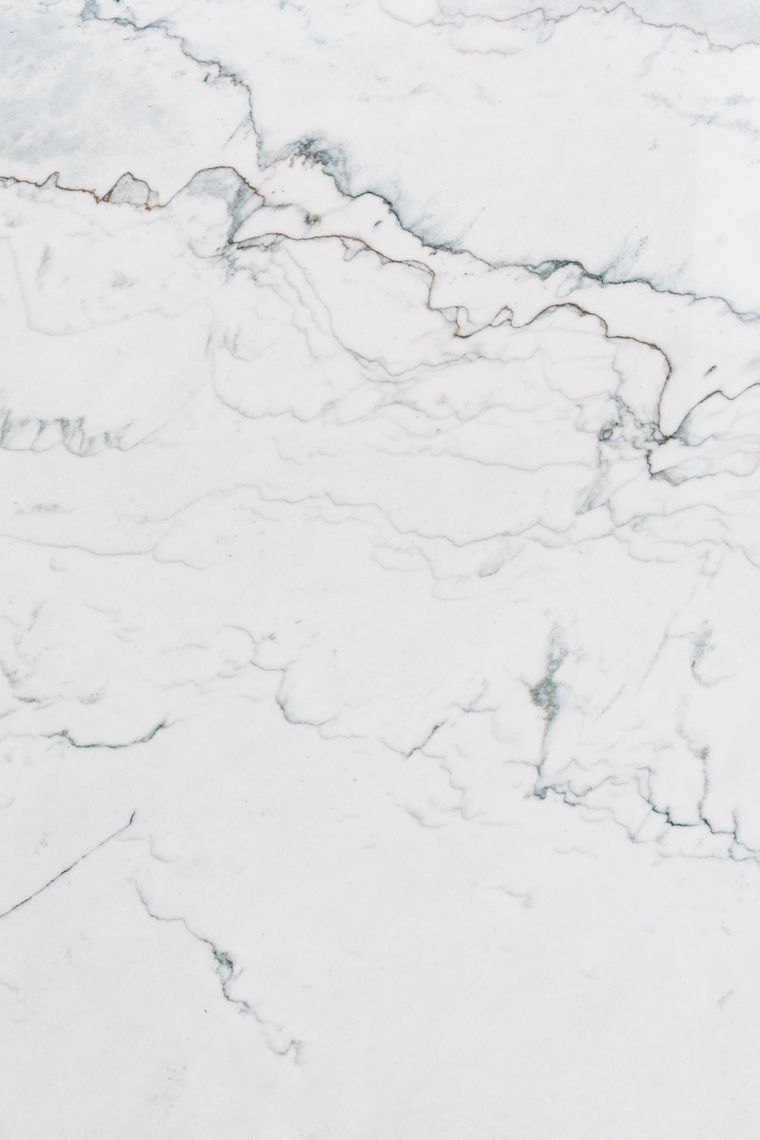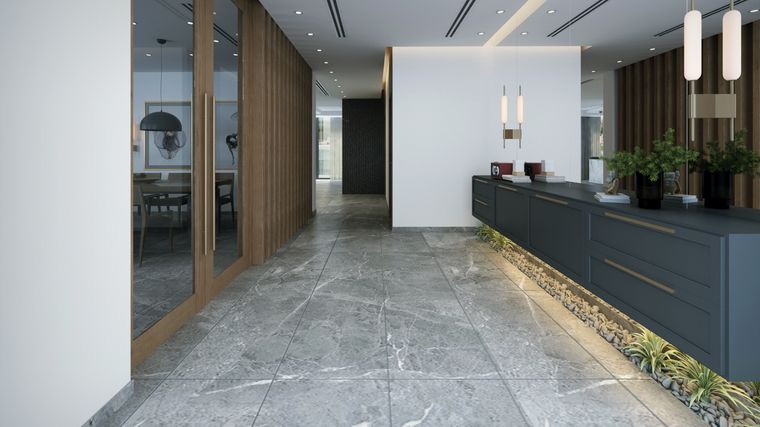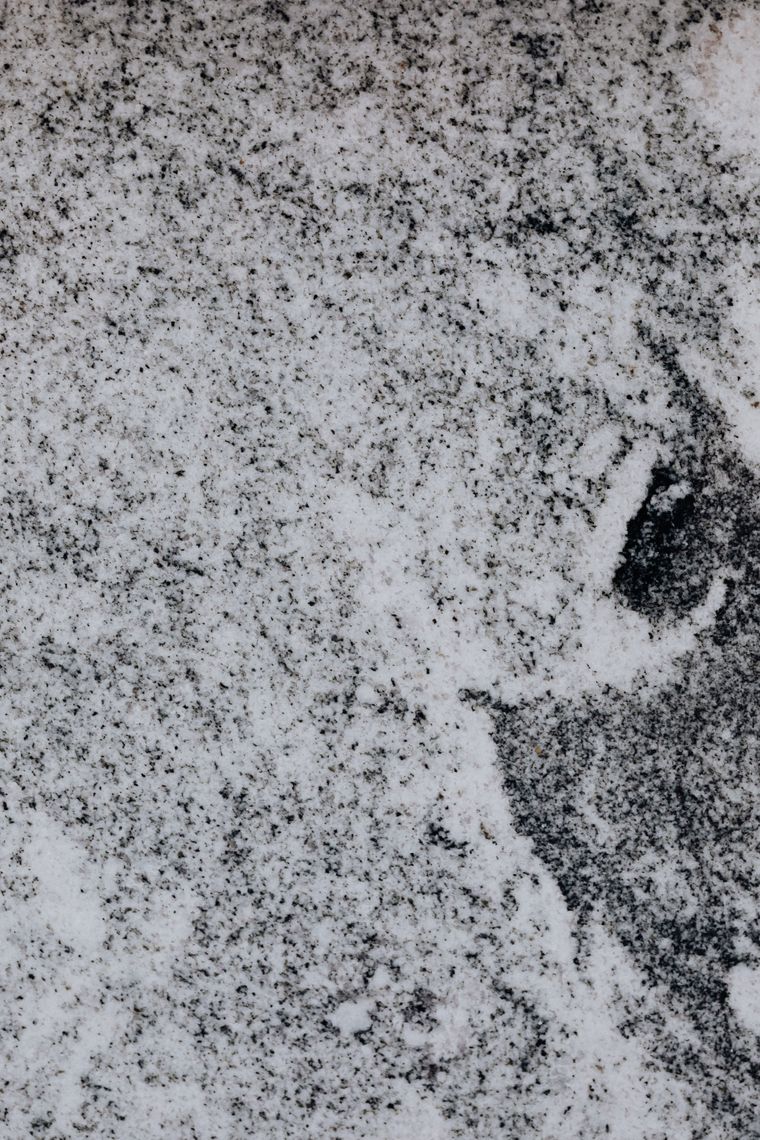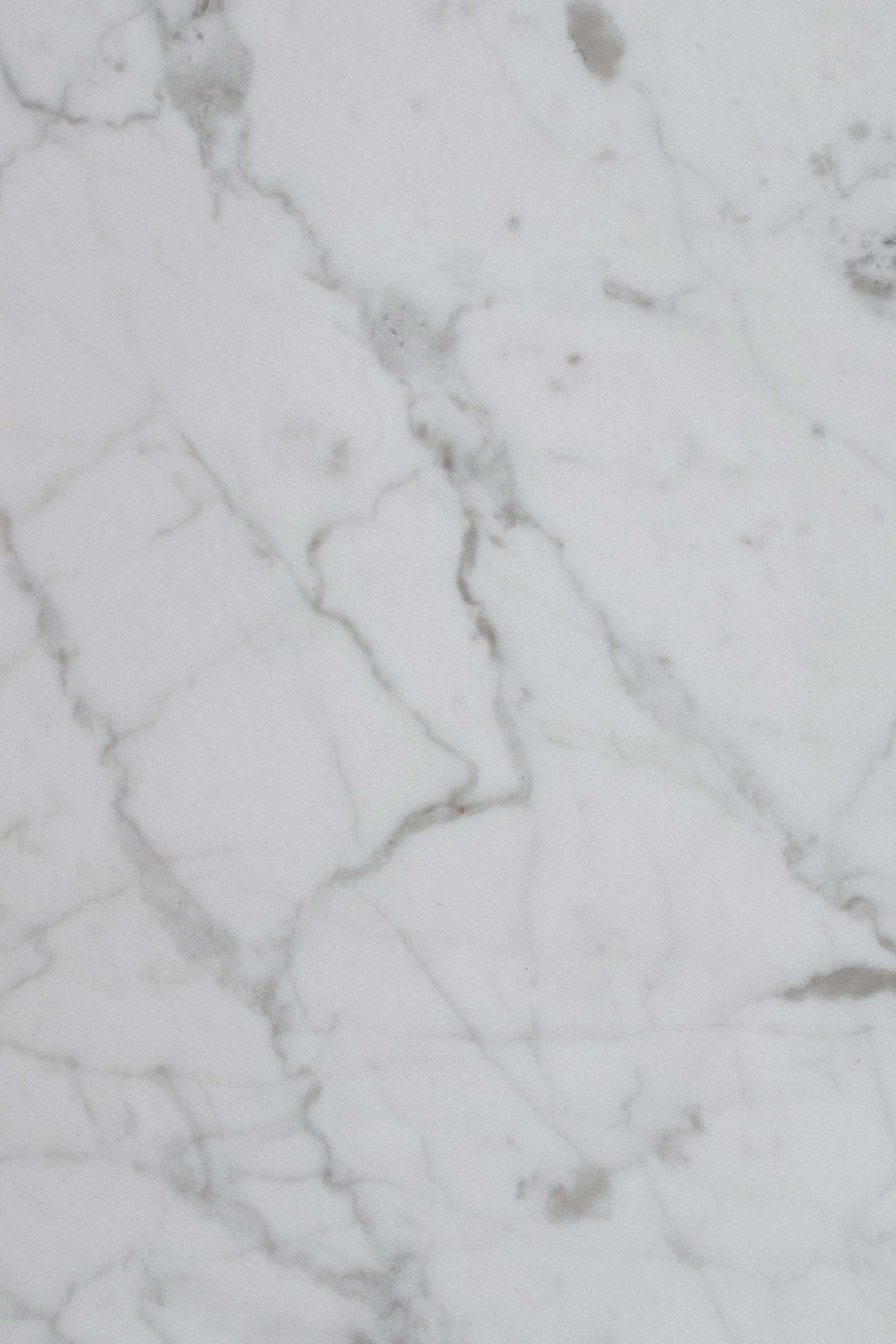
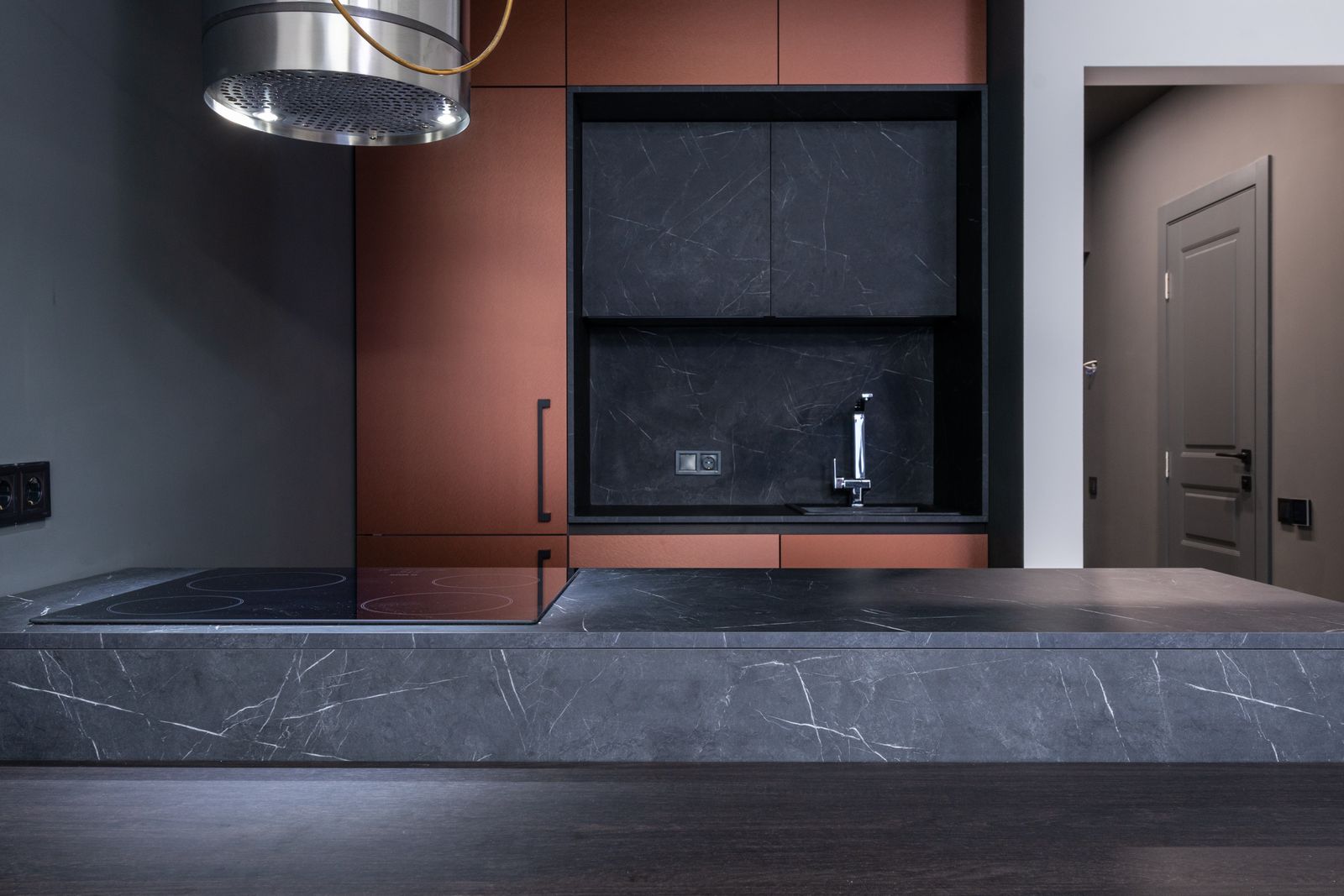
This is the question we are asked more than any other, usually by someone who has already fallen in love with a Calacatta slab and is hoping we will tell them it is fine for a kitchen where three children eat breakfast every morning.
The geology, briefly
Granite is igneous. It cooled slowly from molten rock deep underground, which gave its quartz, feldspar and mica crystals time to interlock into something extremely hard and chemically stable. Marble is metamorphic. It began as limestone — calcium carbonate, essentially compressed seashells — and was recrystallised by heat and pressure into the veined stone we know.
That difference in origin explains everything else on this page. Quartz does not react with acid; calcium carbonate does. Interlocked igneous crystals resist a knife; recrystallised carbonate does not.
Hardness and scratching
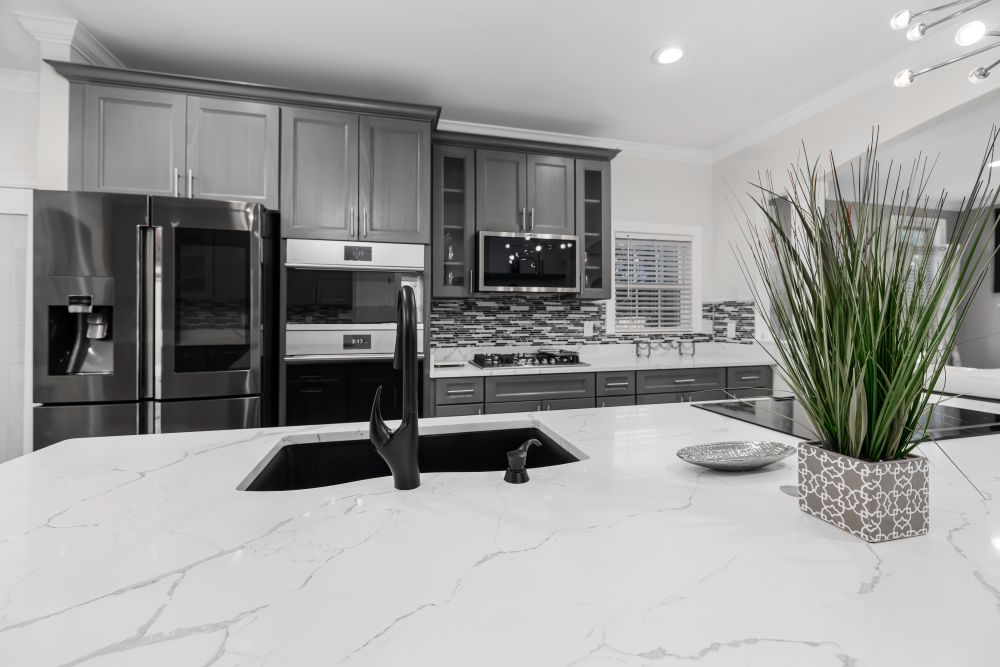
On the Mohs scale, granite sits around 6 to 7. Marble sits around 3 to 4. A steel knife blade is roughly 5.5, which is the whole story in one number: a knife will not mark granite, and it will mark marble.
In practice, scratches on marble are rarely dramatic. On a honed surface they blend in within months. On a polished surface they show as dull lines catching the light, and they accumulate around the sink and the prep zone. Granite in the same kitchen, after five years, looks essentially unchanged.
Staining, etching and the acid problem
People conflate two different failures here, so it is worth separating them.
Staining is absorption. A liquid soaks into the pores and darkens the stone. Both marble and granite are porous and both stain, though granite generally less so. A good impregnating sealer largely solves this for both materials.
Etching is a chemical reaction, and no sealer prevents it. When lemon juice, vinegar, tomato, wine or a limescale-removing cleaner touches marble, the acid dissolves a microscopic layer of the polished surface and leaves a dull mark. It is not a stain sitting on top; it is a small crater in the polish.
This matters enormously in a UAE kitchen where lemon is in everything from the salad to the cleaning cupboard. We have re-polished more marble worktops ruined by a well-meaning housekeeper with a bathroom descaler than by any other single cause.
The single most useful thing we tell clients
If you want marble in a working kitchen, specify it honed rather than polished. A honed surface has no mirror gloss to dull, so etching becomes almost invisible. It is not immune — it just does not advertise.
Heat and the UAE kitchen
Both stones handle heat well; granite is marginally better. Neither will scorch from a hot pan in the way a laminate or a resin-bound engineered quartz will. The real risk with both is thermal shock at an edge or a cut-out — a very hot pan placed directly across the narrow bridge of stone between a hob and a sink can crack it.
Use trivets. Not because the stone is fragile, but because the one location where it is fragile is exactly where people put hot pans.
Maintenance over ten years
The UAE adds two complications that European advice ignores. First, mains water in most of the country is hard, so evaporating splashes leave limescale rings that tempt people towards acidic cleaners. Second, coastal humidity and air conditioning cycling means surfaces are damp more often than you would expect.
| Task | Marble | Granite |
|---|---|---|
| Re-seal interval | Every 9–12 months | Every 18–36 months |
| Daily cleaning | pH-neutral cleaner only | pH-neutral cleaner preferred |
| Etch risk | High on polished, low on honed | Negligible |
| Re-polish in 10 years | Likely once | Rarely needed |
So which should you choose?
Answer three questions honestly.
- Who cooks, and how often? Daily cooking with acidic ingredients points to granite, quartzite or sintered stone.
- Who cleans, and with what? If a housekeeper chooses the products, assume a descaler will appear sooner or later. That rules out polished marble.
- How do you feel about patina? Some clients love the soft, used look marble develops. Others are distressed by the first mark. There is no wrong answer, but be truthful with yourself.
Our usual recommendation for UAE villas: granite or quartzite on the working perimeter, marble on the island or the splashback where it is seen constantly and used rarely. You get the material you fell in love with in the place it will survive.
If you want marble everywhere and you are prepared for the maintenance, we will supply it gladly — we will just make sure you have read this page first.
The middle path: quartzite
Taj Mahal and Mont Blanc quartzite look close enough to marble that most people cannot tell from two metres, with hardness and acid resistance close to granite. It costs more than either, and it is the material we specify most often when a client wants a Calacatta look in a real kitchen. Ask us to acid-test any slab sold as quartzite — some are dolomitic marble wearing the wrong label.
Come to our Sharjah warehouse with a photo of your kitchen and we will put three slabs side by side under the same light. It takes twenty minutes and it settles the question far better than any article can.