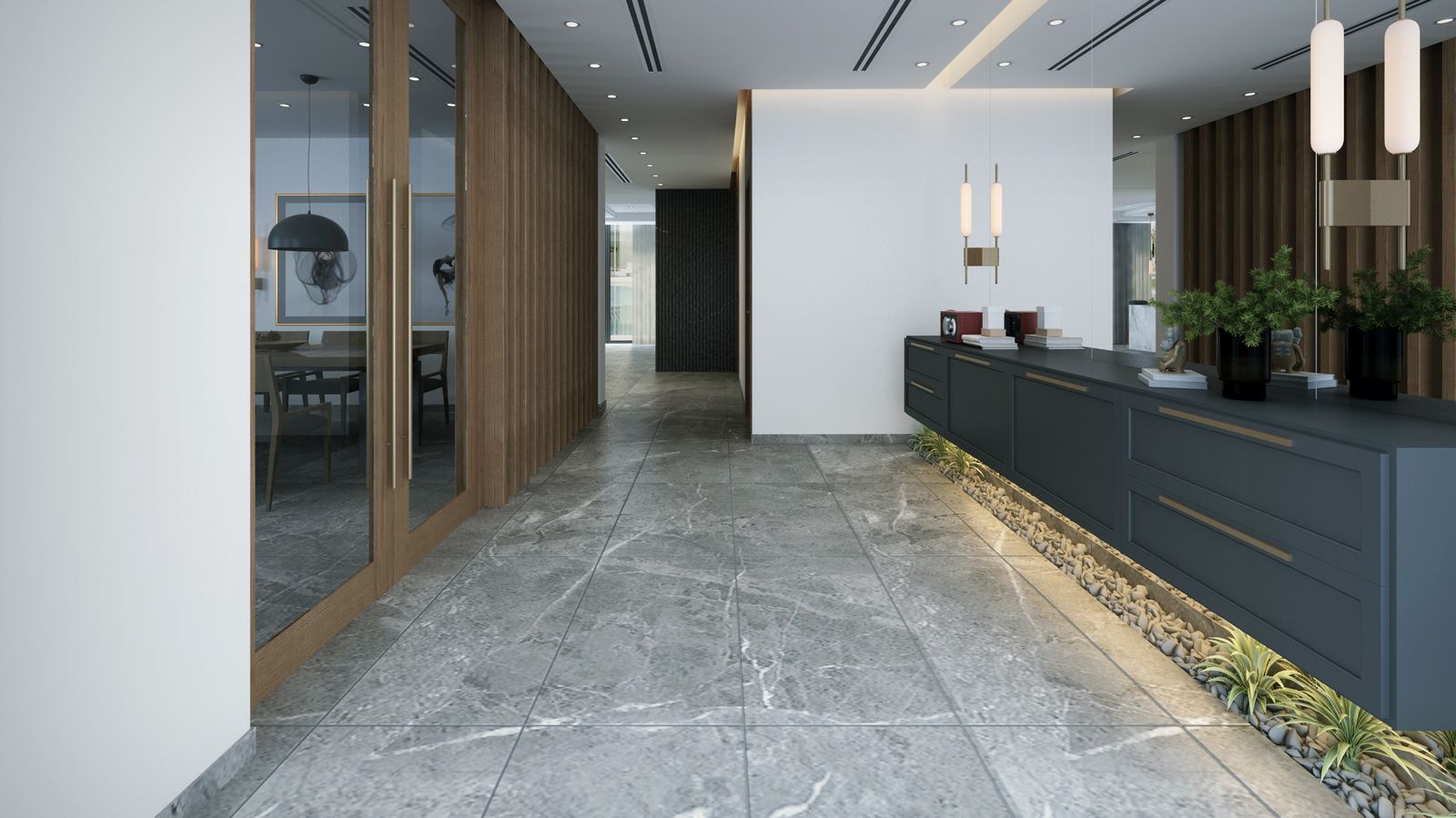
Sand, foot traffic and the wrong cleaning products take the shine off marble faster in the UAE than almost anywhere else. The good news is that marble is a stone that can be renewed again and again. The bad news is that “marble polishing in Dubai” covers everything from a quick buff to full diamond grinding, and choosing the wrong one wastes money or leaves the real damage in place.
Five signs your marble needs professional attention
- Traffic paths. A dull track from the door to the kitchen while the room edges still shine is classic abrasion from sand.
- Etch marks. Pale, matte rings or splashes where lemon, vinegar, cola or acidic cleaners touched the stone.
- Lippage. Tile edges you can feel with your foot, which catch dirt and break up reflections.
- Scratches and chips. Fine scratches from furniture, deeper gouges from dropped objects.
- Dark or yellow staining. Usually oil, rust or water trapped under an old sealer or wax build-up.
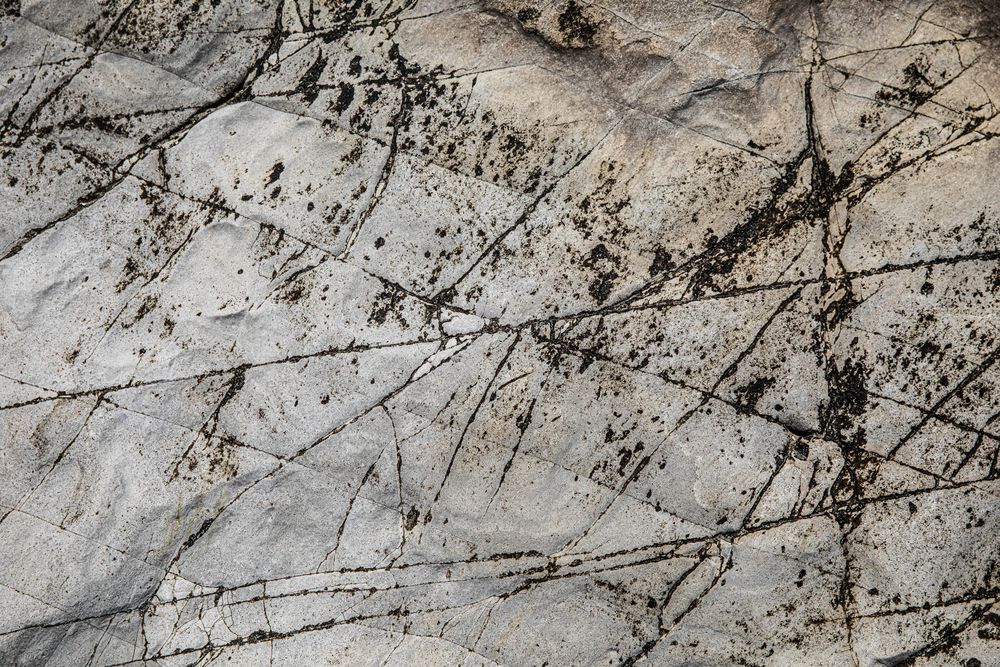
Polishing, honing, grinding and crystallisation compared
These terms are often used interchangeably in quotes, but they are different processes with different results.
| Process | What it does | Best for |
|---|---|---|
| Diamond grinding | Removes a thin layer of stone with coarse diamonds to flatten the floor | Lippage, deep scratches, heavy etching |
| Honing | Uses medium diamonds to create a smooth, satin or matte surface | Light scratches, a non-slip matte finish, bathrooms |
| Diamond polishing | Fine diamond pads and polishing powder refine the stone to a gloss | Restoring a natural, durable shine |
| Crystallisation | A chemical compound buffed with steel wool creates a hard, glossy surface layer | Fast shine on sound floors, routine commercial maintenance |
The crystallisation trap
Crystallisation is cheap and gives an instant mirror shine, which is why it dominates the Dubai market. But on a floor with lippage or deep scratches it only puts a gloss over the damage, and repeated layers can build up, yellow and make the floor slippery. Fix the surface mechanically first; use crystallisation, if at all, as maintenance.
What a full marble restoration involves
A proper marble restoration follows the same sequence whether it is a villa hallway in Arabian Ranches or a hotel lobby on Sheikh Zayed Road:
- Inspection and test patch. We identify the stone, check the existing sealer and test the finish on a hidden area.
- Deep cleaning and stripping. Old wax, coatings and crystallisation layers are removed.
- Repairs. Cracks, chips and open joints are filled with colour-matched resin.
- Grinding. Coarse diamonds flatten lippage so the floor becomes one continuous surface.
- Honing. Progressively finer grits remove the grinding scratches.
- Polishing. Fine diamonds and polishing powder bring the stone up to the gloss you want, from satin to high shine.
- Sealing. An impregnating sealer protects against oil and water stains — see how to seal marble in the UAE climate.
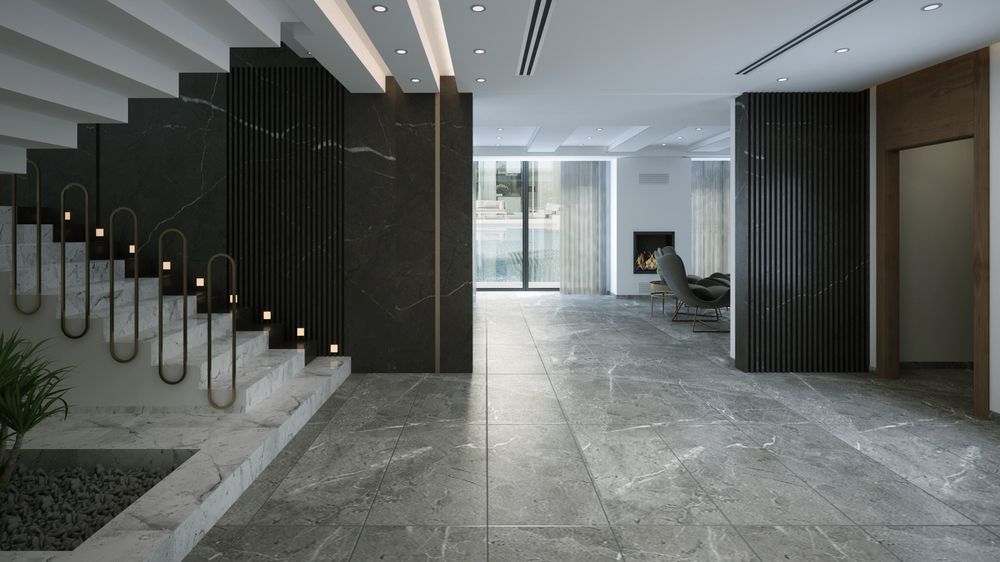
Marble polishing cost in Dubai and Sharjah
Indicative 2026 prices for residential and commercial work in Dubai, Sharjah and the Northern Emirates:
- Routine re-polish or crystallisation of a sound floor: around AED 15–35 per m².
- Honing to a matte or satin finish: around AED 25–50 per m².
- Full restoration with diamond grinding, honing and polishing: around AED 35–75 per m².
- Sealing after restoration: around AED 10–25 per m².
- Crack, chip and joint repair: usually priced per item or added as a day rate.
Staircases, skirting, vanity tops and small bathrooms are priced per item or by the day because the machines are slower on small areas. Most companies, us included, have a minimum visit charge.
How often UAE floors need polishing
Frequency depends on traffic and how much sand reaches the floor:
- Villa living areas and entrances: a professional re-polish every 12–24 months, with full restoration every 5–8 years.
- Apartments: every 2–3 years in most cases.
- Hotel lobbies, malls and offices: every 3–6 months under a maintenance contract — see our guide to commercial marble projects.
Between visits, entrance mats, felt pads under furniture, dust mopping and a pH-neutral stone cleaner do more for your shine than anything else.
Not sure what your floor needs?
Send us three or four photos in daylight, one close-up and one wide, on WhatsApp, and we will tell you whether it needs a re-polish or full restoration before anyone visits. Contact our restoration team.
Frequently asked questions
How much does marble polishing cost in Dubai?
As an indicative guide, a routine re-polish or crystallisation of a sound marble floor is around AED 15–35 per square metre, while full restoration with diamond grinding to remove lippage and deep scratches is roughly AED 35–75 per square metre. Small jobs usually carry a minimum visit charge.
How often should marble floors be polished in the UAE?
Busy villa living areas typically need a professional re-polish every 12–24 months, and commercial lobbies every 3–6 months as part of a maintenance contract. Sand tracked in from outside is the main cause of dulling in the UAE.
What is the difference between marble polishing and crystallisation?
Mechanical polishing uses progressively finer diamond pads to refine the stone surface itself. Crystallisation uses a chemical compound and steel wool under a machine to create a hard, glossy surface layer. Crystallisation is fast and cheap, but it is a surface treatment and is not a substitute for proper diamond polishing on a damaged floor.
Can etch marks from lemon juice or cleaners be removed?
Yes. Light etching is usually removed with a polishing powder or fine diamond pads. Deep etching needs honing back to sound stone and re-polishing. After the repair, the area should be resealed.
Is marble polishing dusty or disruptive?
Modern diamond grinding is a wet process, so there is very little airborne dust. Expect slurry, machine noise and a drying period. A typical villa ground floor is completed in one to three days, and furniture is moved room by room.