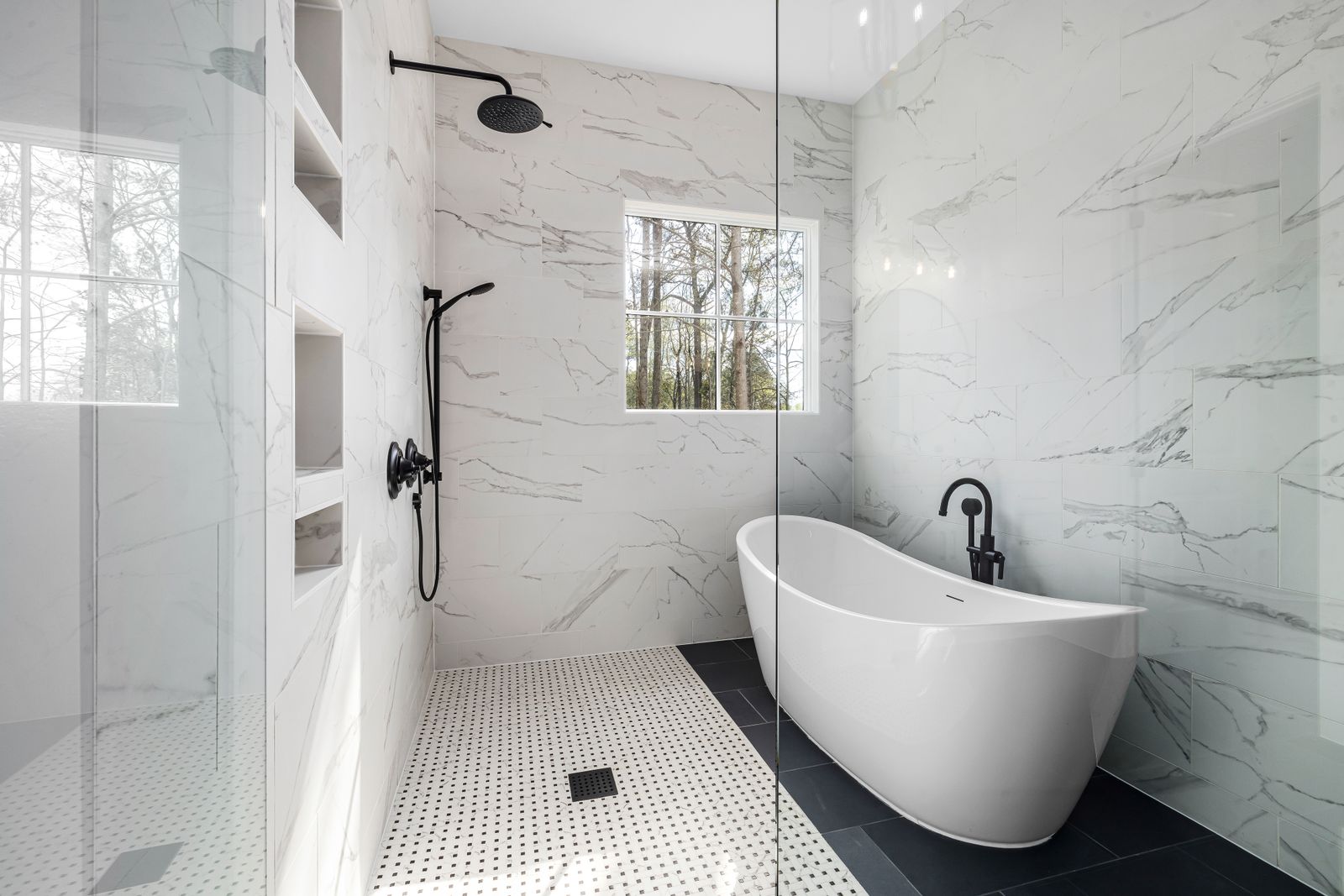
Bathrooms are small rooms, which is exactly why they reward book-matched marble more than almost any other space in the house — the whole surface is visible at once, from every angle, under strong light. Here is how we approach the layout, the finish and the details that keep it practical.
Book-matched walls as the centrepiece
Two slabs cut from the same block, opened like a book so the veining mirrors across the joint, turn a shower wall or a feature wall behind the vanity into the visual anchor of the room. Because a bathroom is small, the effect reads clearly from the doorway in a way it might not in a larger, more furnished space.
The trade-off is cost and lead time: book-matched pairs have to be selected and cut together, and the slab yield is lower than cutting standard tiles from the same block. It is worth it precisely once in a bathroom — usually the wall you see first on entry, not every wall in the room.
Dry-lay before you commit
Ask to see your book-matched pair laid out dry, full size, before installation. This is the only way to confirm the mirror join actually falls where you expect once cut around a mirror recess or niche.
Choosing a floor finish that won’t become a hazard
Polished marble is the most slip-prone finish available and the one clients ask for most often, purely on looks. In a wet bathroom floor this is a genuine safety issue, not a marketing preference. Honed (matte) and lightly textured finishes give up almost nothing on veining visibility while meaningfully improving slip resistance underfoot when wet.
Our rule of thumb: polished finish on vertical surfaces where it will never get wet underfoot, honed or leather finish on any horizontal wet-area floor.
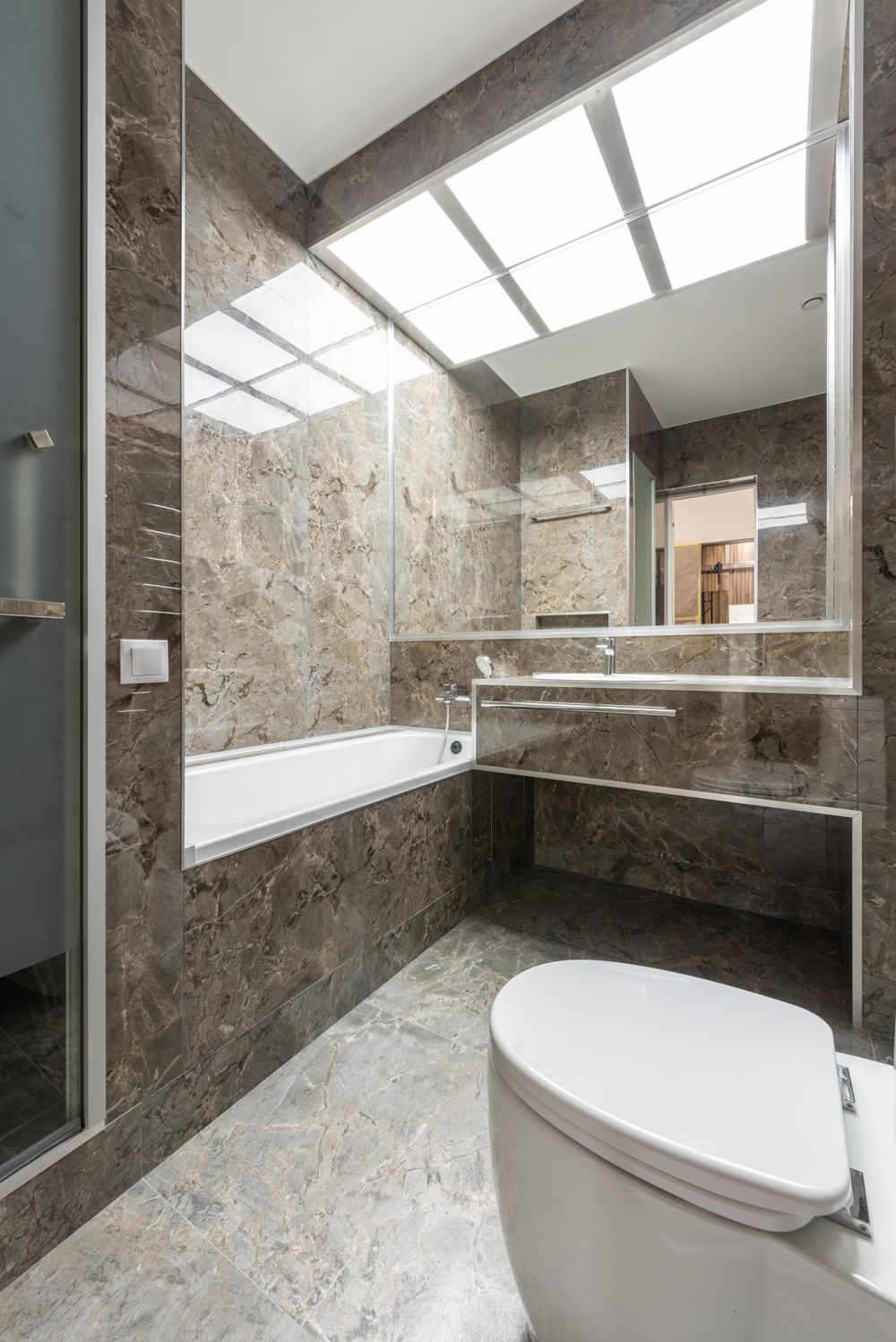
Vanity tops and basin details
A single continuous marble vanity top, with an integrated or drop-in basin, reads as considerably more expensive than a segmented top with a separate splashback — and often is not much more costly to specify, since the labour saving on joints offsets some of the extra slab area. Waterfall edges on either end are a strong look in a double-vanity layout but add real material cost; a simple eased or bullnose edge is a reasonable place to save budget without losing the marble itself.
Wet-room and shower detailing
- Movement joints at every change of plane and at maximum 3–4 metre intervals on long runs, filled with a flexible sanitary-grade sealant, not grout — rigid grout in a wet room cracks as the substrate moves.
- Falls to drain must be built into the screed before the stone goes down, never corrected by tapering the stone itself.
- Sealing before grouting on porous stone, so grout haze removal never touches unsealed marble.
- Niche and shelf returns cut from the same slab as the main wall, so the veining continues through rather than breaking at an inserted shelf.
Which stone suits which look
| Look | Stone | Notes |
|---|---|---|
| Bright, clean, minimal | Statuario or Carrara marble | Honed finish on the floor, polished on walls |
| Warm, spa-like | Travertine | Naturally matte, forgiving of water spots |
| Bold, statement | Calacatta or backlit onyx | Reserve for one feature wall, not the whole room |
| Low-maintenance family bathroom | Engineered quartz | Non-porous, no etching risk from cosmetics or cleaners |
Whatever stone you choose, budget for a proper sealing schedule from day one — a bathroom sees more standing water and more cleaning product contact than almost any other room in the house.