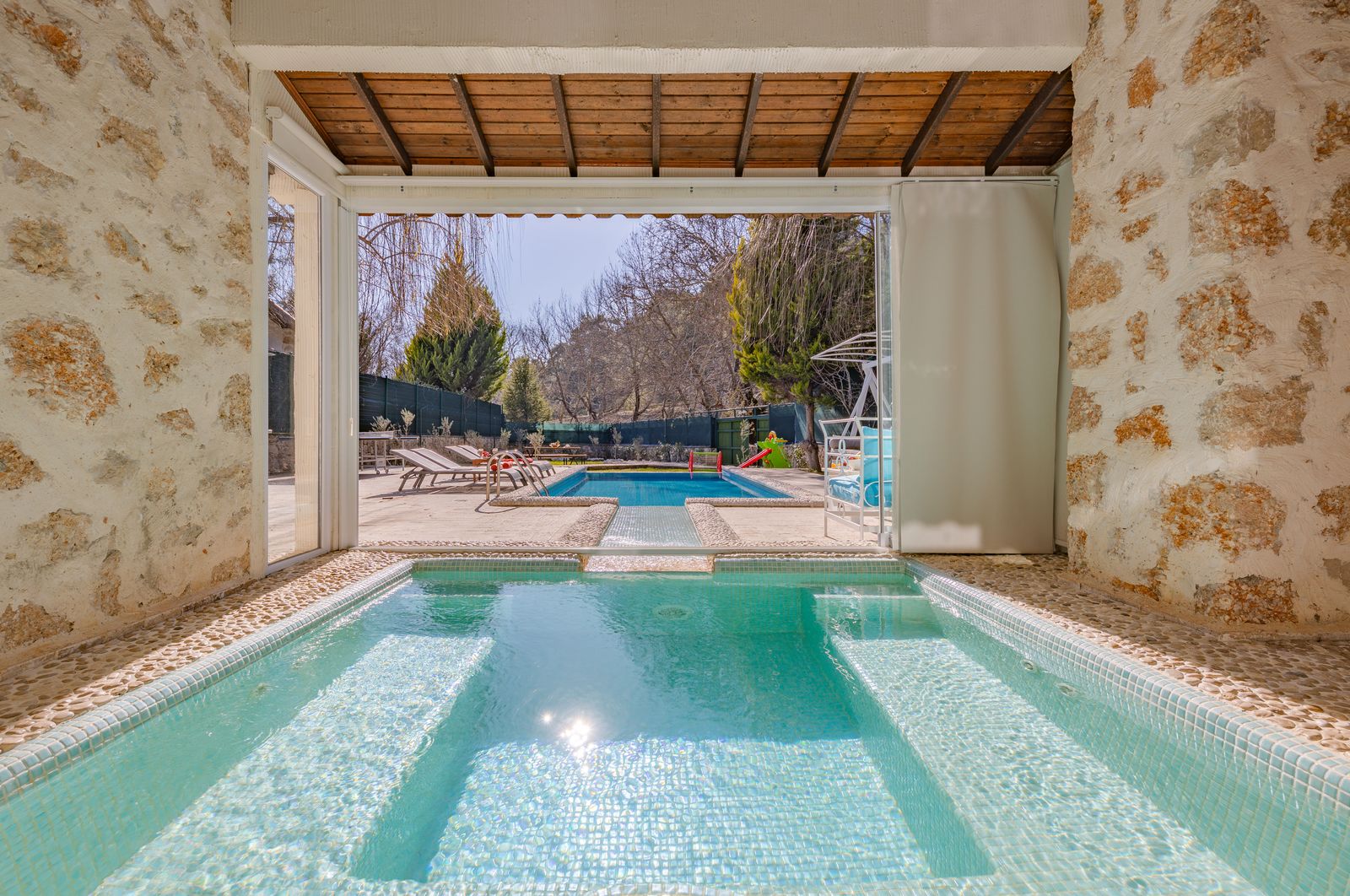
Travertine is sedimentary limestone formed around mineral hot springs, which leaves it naturally pitted and porous — a property that sounds like a drawback and is actually the reason it works so well outdoors in this climate. Here is how we specify it for UAE floors, terraces and pool surrounds.
Why travertine stays cooler underfoot
Travertine’s natural porosity gives it a lower thermal mass and slightly more reflective, matte surface than dense polished stone or porcelain — both factors that reduce how much heat it absorbs and holds in direct UAE sun. On a 45°C afternoon, the difference between a travertine deck and a dark porcelain paver underfoot is immediately noticeable, which is exactly why it remains the default choice around villa and hotel pools across the country.
Colour matters as much as material
Within travertine itself, paler beige and ivory tones stay cooler than darker walnut or noce tones. If bare feet around the pool are a priority, weight the colour decision as heavily as the stone choice.
Filled vs unfilled, and which finish where
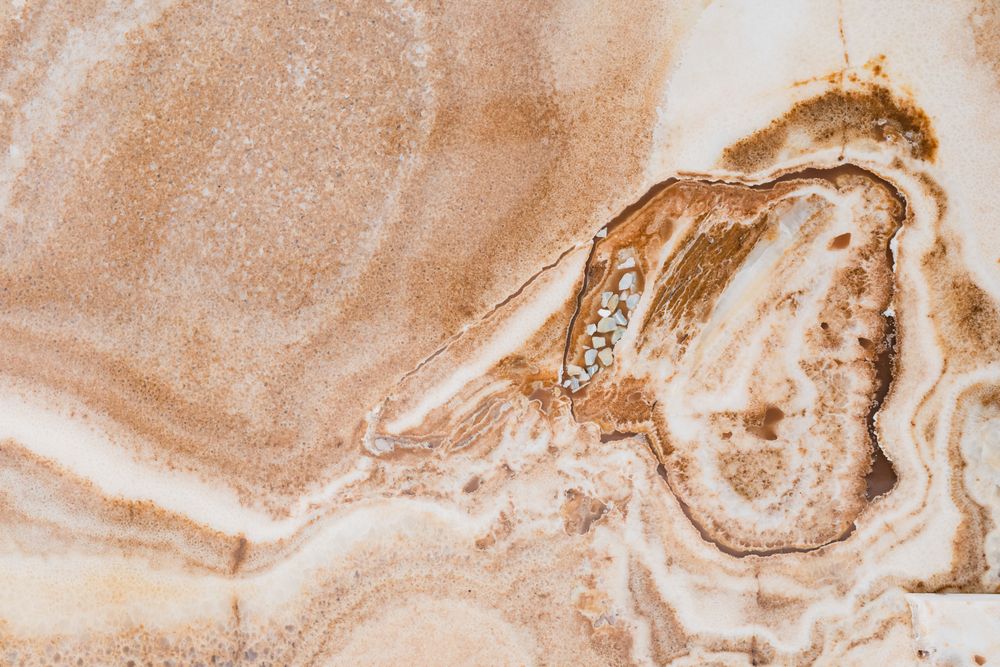
Travertine’s natural surface holes can be left open (unfilled) or filled with a colour-matched resin or cement filler (filled). Unfilled travertine gives the most rustic, textured look and the best slip resistance, making it a strong choice for pool surrounds. Filled travertine gives a smoother, more formal finish suited to interior flooring, where the pitted texture would otherwise trap dirt in a living space.
Both are available honed (matte) or, less commonly for floors, polished. We steer almost every outdoor and pool project towards honed, unfilled travertine — polished travertine outdoors becomes genuinely dangerous once wet.
Slip resistance around a pool
Ask any supplier for a slip resistance rating (an R-rating or pendulum test value) on travertine intended for pool surrounds specifically — not a generic figure for the material in general, since finish and filling change the number significantly. Unfilled, honed or tumbled travertine consistently performs well; polished or heavily filled travertine does not, regardless of how good it looks in a showroom sample.
Sealing travertine outdoors
Because travertine is genuinely porous, unsealed outdoor travertine will absorb pool chemicals, sun cream oils and salt from coastal air, leading to staining and gradual surface erosion. A breathable, chlorine-tolerant impregnating sealer is essential for any pool surround, reapplied roughly every 12 months — more often in a heavily used family pool. See our full sealing and maintenance guide for the wider schedule across stone types.
Using it indoors too
Filled, honed travertine flooring inside the villa creates a natural continuity with an outdoor terrace finished in the unfilled version of the same stone — a detail that reads as considered rather than accidental when the two floors meet at a sliding door. It also works well alongside limestone for a quiet, warm-toned palette that lets furniture and landscaping do the visual work.